

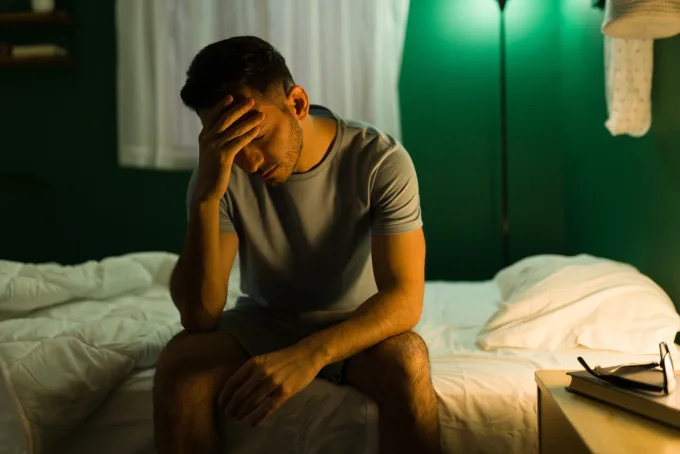
After just one night of sleep deprivation:
- Cortisol increases by 21%
- Testosterone drops by 24%
- Muscle protein synthesis drops by 18%
That is a hormonal profile tilted toward breakdown – not adaptation!
A recent review in the Journal of Clinical Medicine synthesising research on sleep and athletic performance reported that every additional hour awake following sleep loss reduces exercise performance by 0.4%.
That compounds quickly.
During sleep we see surges in growth hormone, testosterone and IGF-1 – the very mechanisms responsible for tissue repair, adaptation and recovery. Muscle protein synthesis increases overnight. Cut sleep short and you blunt the very adaptation you trained for.
And this shows up in real performance.
A 2026 study in the Journal of Strength and Conditioning Research tracking collegiate athletes found that longer sleep the night before predicted higher vertical jump performance the next day.
Sleep more. Jump higher.
It also affects injury risk. In young athletes, sleeping 8 hours increased musculoskeletal injury risk 1.7-fold.
Add appetite dysregulation to the equation:
After two nights of 4 hours sleep:
- Ghrelin (hunger hormone) ↑ 24%
- Leptin (satiety hormone) ↓ 18%
*Participants craved calorie-dense, high-carb foods immediately.
The good news?
Deliberate sleep extension works.Across multiple studies, when athletes deliberately increased sleep:
- Sprint times improved
- Tennis serve accuracy improved
- Basketball shooting accuracy increased
- Swimmers became more efficient
- Fatigue and sleepiness reduced
Even 30–90 minute naps restored strength and power after partial sleep loss. Napping before afternoon training improved performance outcomes.
Yet we still spend thousands on recovery tools while underusing the most powerful one.
Sleep is not passive. It is biological investment!
Optimal duration will vary:
- Adolescents require more than adults
- Endurance athletes may require more than power athletes
- Quality (deep sleep) matters as much as quantity
- Consistency – similar sleep/wake times – improves outcomes
If you are serious about performance – whether in sport, business, or leadership – protect sleep the way you protect training.
Because sleep is your superpower 🦸🦸